LOADING...

Category "Home Security Systems"

12Jun

The Real Reason Your Neighbor’s Alarm Didn’t Stop a Burglary

by kentzel@wisehomesolutions.com

When most people think about home security systems, they picture a loud alarm blaring the moment someone breaks into a house. It’s a common belief that alarms alone are enough to scare off criminals and prevent theft. But if you’ve ever heard about a neighbor whose alarm went off during a burglary and still ended up losing valuables, you may have wondered why. The truth is that alarms are only one piece of a much larger security strategy.

Modern criminals have become more aware of how traditional alarm systems work. Many understand that an alarm doesn’t physically stop them from entering a property. Instead, it simply alerts homeowners, monitoring centers, or nearby neighbors that something is happening. Depending on response times, a burglar may still have several minutes to enter a home, grab valuables, and leave before anyone arrives.

The Problem with Relying on Alarms Alone

Alarms are reactive by nature. They are designed to respond after a security breach has already occurred. While they serve an important purpose, they don’t necessarily prevent someone from attempting a break-in in the first place.

Consider a typical burglary scenario:

  • A criminal approaches a home.
  • They see no cameras, no visible security signs, and poor exterior lighting.
  • They break a window or force open a door.
  • The alarm activates.
  • The burglar quickly takes what they came for and leaves before authorities arrive.

In this situation, the alarm worked exactly as intended. It detected the intrusion and sent a notification. However, it didn’t stop the crime from happening.

This is why security professionals increasingly recommend a layered approach to protection.

What Is Layered Security?

Layered security combines multiple technologies and security measures to discourage, detect, and respond to threats. Rather than depending on a single device, several systems work together to create a stronger defense.

Think of it like protecting a castle. You wouldn’t rely on a single wall to keep intruders out. You would use gates, guards, watchtowers, lighting, and multiple barriers. The same concept applies to modern security.

A layered security system often includes:

  • Security cameras
  • Alarm systems
  • Smart locks and access control
  • Motion-activated lighting
  • Professional monitoring
  • Mobile app notifications

Each layer serves a different purpose, creating multiple opportunities to stop a criminal before they ever enter the property.

Cameras Change Criminal Behavior

One of the most effective deterrents available today is visible video surveillance.

Most burglars are looking for easy targets. When they see clearly visible cameras around a property, they know their actions are being recorded. That footage can help identify them and provide evidence to law enforcement.

Cameras also allow homeowners to monitor activity in real time through their smartphones. Instead of discovering a break-in after the fact, homeowners can receive alerts and view live footage immediately.

In many cases, the presence of cameras alone is enough to encourage criminals to move on to a less protected property.

Access Control Adds Another Barrier

Many homeowners focus on detecting intrusions but overlook preventing them.

Smart locks and access control systems make unauthorized entry significantly more difficult. Homeowners can remotely lock doors, create temporary access codes, and receive notifications whenever someone enters or exits.

If a door is accidentally left unlocked, many systems can send an alert or automatically secure the property.

By adding another obstacle, access control helps reduce opportunities for criminals before an alarm ever becomes necessary.

Lighting Eliminates Hiding Places

Darkness is often a burglar’s best friend.

Poorly lit homes provide cover for criminals approaching windows, doors, and side yards. Motion-activated lighting removes that advantage by instantly illuminating suspicious activity.

A well-lit property sends a clear message that the homeowner takes security seriously. Combined with cameras, lighting increases visibility and creates an environment that criminals typically prefer to avoid.

Professional Monitoring Speeds Up Response

An alarm is most effective when someone is actively watching for alerts.

Professional monitoring services help ensure that emergency notifications aren’t missed because a homeowner is asleep, at work, or traveling. When an alarm is triggered, monitoring centers can quickly verify the event and contact emergency responders if needed.

This added layer reduces delays and helps improve response times when every minute matters.

The Goal Isn’t Just Detection—It’s Deterrence

One of the biggest misconceptions about security is that the goal is simply to catch criminals.

The real objective is to prevent crimes from happening at all.

A property with visible cameras, monitored alarms, smart locks, adequate lighting, and security signage creates a much higher level of perceived risk for potential intruders. Criminals generally seek easy opportunities, and a layered security system makes a home far less attractive.

The best security system isn’t the one that records a burglary. It’s the one that convinces the burglar to choose another target.

The Same Principle Applies to Businesses

This layered approach isn’t limited to residential properties. The most effective commercial security systems use the same strategy.

Businesses often combine surveillance cameras, access control systems, intrusion detection, alarm monitoring, and perimeter lighting to create comprehensive protection. By integrating these technologies, business owners can better protect employees, assets, and sensitive information while reducing security vulnerabilities.

29May

Why We Install PDK Access Control Systems for Businesses

by kentzel@wisehomesolutions.com

Why We Install PDK Access Control Systems for Businesses

At Wise Security Solutions, we believe access control should do more than just lock and unlock doors. A modern access control system should make managing your business easier, improve commercial security, and give you flexibility as your company grows. That’s why we regularly recommend and install PDK access control systems by ProdataKey.

After working with many different access control platforms, we’ve found that PDK consistently delivers the reliability, simplicity, and remote management features businesses need today. Whether we’re installing a system for a small office, warehouse, apartment complex, gym, or multi-location business, PDK gives our clients a modern solution that is easy to use and built to scale.

Why We Recommend PDK Access Control

One of the biggest reasons we install PDK systems is because they simplify security management for business owners. Traditional access control systems can be complicated, outdated, and difficult to manage without specialized training. PDK was designed differently.

PDK is a cloud-based, mobile-first access control platform that allows businesses to manage doors, users, schedules, and permissions from virtually anywhere. Instead of relying on old-fashioned keys or on-site servers, administrators can control their entire system through an easy-to-use app or web dashboard.

For our clients, this means less frustration, fewer service calls, and more control over their building security.

Easy Remote Management

Many businesses today operate beyond the traditional 9-to-5 schedule. Employees work different shifts, managers oversee multiple locations, and owners may not always be on-site. That’s why remote access management has become so important.

With PDK, business owners can:

  • Lock or unlock doors remotely
  • Add or remove employees instantly
  • Create custom access schedules
  • Monitor activity logs in real time
  • Receive alerts for security events
  • Manage multiple buildings from one platform

We recommend PDK because it gives our clients the flexibility to manage security without needing to physically be at the property.

Mobile Credentials Make Access Easier

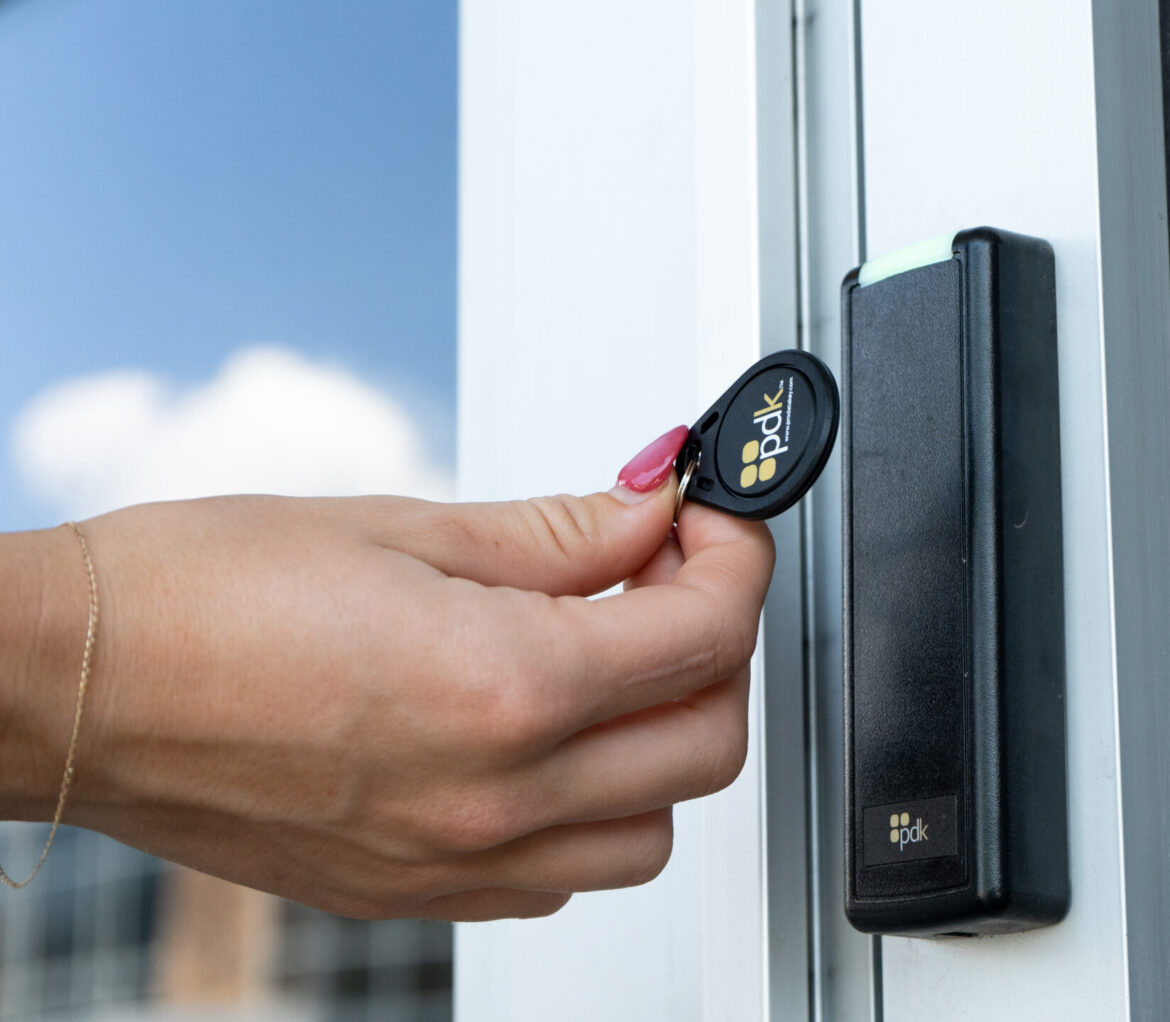
Another reason we install PDK systems is the convenience of mobile credentials. Instead of relying only on key cards or fobs, employees can use their smartphones to access doors securely using Bluetooth technology.

This creates several advantages for businesses:

  • Fewer lost keys and access cards
  • Faster credential management
  • Improved convenience for employees
  • Reduced replacement costs
  • Immediate removal of access when needed

For businesses with employee turnover or multiple vendors, being able to instantly revoke access is a major security improvement over traditional lock-and-key systems.

Reliable and Scalable for Growing Businesses

When we install access control systems, we always think long term. Businesses grow, staffing changes, and security needs evolve over time. One reason we trust PDK is because it scales easily without requiring businesses to completely replace their system later.

PDK works well for:

  • Small offices
  • Warehouses
  • Retail stores
  • Apartment complexes
  • Gyms and fitness centers
  • Restaurants
  • Schools
  • Multi-location businesses

As businesses expand, additional doors, users, and locations can easily be added to the system. This flexibility helps protect our clients’ investment while allowing their security system to grow alongside their business.

Real-Time Alerts Improve Security

Security is about more than controlling access, it’s also about visibility. PDK provides real-time alerts and reporting tools that help businesses stay informed about what’s happening at their property.

Administrators can receive notifications for:

  • Forced door openings
  • Doors left open
  • Unauthorized access attempts
  • Controller issues
  • System health alerts

These features allow businesses to respond quickly to potential security concerns while maintaining better oversight of daily operations.

Simple for Businesses to Use

One thing we hear often from clients is how easy PDK is to use compared to older access control systems. Many traditional systems require complicated programming or expensive on-site servers. PDK simplifies the entire experience.

As installers, we appreciate that the platform is straightforward to configure and maintain. More importantly, our clients appreciate that they can manage their own system without needing constant technical support.

That ease of use is one of the biggest reasons we continue recommending PDK for commercial access control installations.

Integrates with Modern Security Systems

At Wise Security Solutions, we often install access control alongside surveillance cameras, alarm systems, and remote monitoring solutions. PDK integrates well with modern security technologies, helping businesses create a more complete and connected security system.

When access control, video surveillance, and alarms work together, businesses gain better visibility, stronger protection, and more efficient security management overall.

Upgrade Your Business Security with PDK

Modern businesses need smarter security solutions than traditional keys and outdated systems can provide. That’s why we continue to install PDK access control systems for businesses looking for better convenience, stronger security, and easier management.

If you’re considering upgrading your building security, Wise Security Solutions can help you determine whether PDK access control is the right fit for your business.

22May

Why having a security system for a dance studio is important

by kentzel@wisehomesolutions.com

A dance studio is constantly seeing people of all ages come in and out of the studio on a day to day basis. It is the owners responsibility to ensure all of the kids under the age of 18 are safe all hours they are there. It ultimately becomes a liability for the company and everyone else involved. Implementing security measures at dance studios is just as important as any other commercial security facility.

Why it’s important 

The sad truth is girls and boys under the age of 18 are at risk from child predators. Since dance studios are a public place, this means people entering that aren’t supposed to be there is very likely. The opening hours (around 3pm-10pm) tend to be chaotic and busy, lots of in and out of the doors. Whether that’s children not being picked up, people entering the building that aren’t supposed to be there, personal items being taken inside, etc. These are some of the many reasons why having high-quality video surveillance installed in the actual dance studios, common areas, parking lots, and wherever else feels fit is essential to protecting not only the children and teenagers but the company as a whole.

Specific Security you should consider implementing

  1. Video Surveillance Security Cameras

24/7 video monitoring ensures a watchful eye over the property, and everyone that is entering or exiting. Which is crucial in case anything happens out of the ordinary. Key tip: have cameras installed in high volume areas like the dance studios, hallways, the area where dancers wait for their classes to start, parking lots, etc. The more cameras the better!

  1. Alarm system and sensors

Dance studios typically have varying hours. Open from 3pm-10pm Monday through Thursday, but sometimes closed or open during the weekends. This is a big reason there should be alarm systems in place to ensure the wrong people aren’t entering. 

  1. Keypad door locks

Installing keypad door locks is another additional safety essential for rooms that need to be secure. These include rooms like the main office, storage, closets, any other offices, etc. This protects valuable items while people are in the building and while no one is too. Key tip: don’t have the same code for multiple door locks.

Ultimately, it’s a liability for the dance studio to keep all of their students safe. When a child or teenager attends dance classes at a studio, that studio is responsible for their safety while they are there. It’s the dance studio’s job to create a secure environment where parents feel comfortable dropping their children off each week. Investing in proper security systems not only helps protect students, staff, and valuable property, but it also helps protect the reputation of the business itself. From video surveillance to alarm systems and keypad door locks, implementing the right commercial security measures can make a major difference in preventing incidents before they happen. At the end of the day, safety should always be a top priority for any dance studio.

8May

Choosing the Right Commercial Security System for Your Business Size

by kentzel@wisehomesolutions.com

Choosing the right security system for your business is not a one-size-fits-all decision. A small retail shop has very different security needs than a warehouse, office building, or multi-location company. The right setup should protect your property, employees, customers, and assets without overcomplicating your daily operations. Investing in the right commercial security solution can also help reduce liability, improve efficiency, and give business owners peace of mind.

The biggest mistake many businesses make is either underestimating their risks or overspending on equipment they don’t actually need. Understanding how your business size impacts your security needs is the first step toward building a smarter, more effective system.

Start by Evaluating Your Business Risks

Before choosing cameras, alarms, or access control systems, it’s important to look at your specific vulnerabilities.

Ask yourself:

  • How many entrances and exits does your building have?
  • Do employees or customers access restricted areas?
  • Are you storing expensive inventory or sensitive information?
  • Does your business operate after hours?
  • Do you have multiple employees coming and going throughout the day?
  • Is your parking lot or exterior well monitored?

A small coffee shop may mainly need burglary prevention and basic surveillance, while a medical office or warehouse may require stricter access control, video retention, and monitoring across multiple zones.

The more complex your business operations become, the more strategic your security system needs to be.

Small Businesses: Focus on Essential Protection

Small businesses often benefit from simple but effective systems. Many owners assume they don’t need much security because they have fewer employees or a smaller building, but smaller businesses are actually common targets for theft and vandalism.

For smaller spaces, the focus should typically include:

Video Surveillance

A few strategically placed cameras can cover entrances, registers, inventory areas, and parking lots. Modern systems also allow remote viewing directly from your phone.

Intrusion Detection

Door and window sensors, motion detectors, and alarms help alert you to break-ins after hours.

Smart Alerts

Mobile notifications can instantly tell you when alarms are triggered, doors are opened, or unusual activity is detected.

Basic Access Control

Even smaller businesses can benefit from keypad or mobile access instead of relying on physical keys that can easily be copied or lost.

For many small businesses, simplicity and reliability matter more than having every advanced feature available.

Mid-Sized Businesses: Scalability Becomes Important

As your business grows, security becomes more than just preventing break-ins. You may need to manage employee access, monitor multiple departments, or maintain visibility across larger properties.

Mid-sized businesses often require:

More Camera Coverage

Larger buildings typically need additional cameras covering hallways, storage rooms, loading docks, employee entrances, and customer-facing spaces.

Access Control Systems

Instead of traditional keys, many businesses move to badge access, mobile credentials, or scheduled permissions for employees.

Integrated Systems

A major advantage of modern security systems is integration. Cameras, alarms, access control, and automation can all work together through one platform.

For example:

  • A door forced open after hours can automatically trigger cameras to record.
  • Business owners can lock or unlock doors remotely.
  • Managers can review employee access logs if an incident occurs.

Scalable systems are especially important because they allow your security setup to grow alongside your business instead of needing a complete replacement later.

Large Businesses and Commercial Facilities: Advanced Security Is Critical

Larger commercial properties usually require layered security strategies rather than standalone equipment.

Businesses like warehouses, manufacturing facilities, corporate offices, healthcare buildings, and multi-location operations often need:

Enterprise-Level Access Control

Different employees may require different levels of access depending on their role, schedule, or department.

24/7 Professional Monitoring

Large facilities are often vulnerable during overnight hours, weekends, and holidays. Professional monitoring ensures emergency response even when no one is onsite.

High-Resolution Surveillance Systems

Large buildings may require dozens of cameras with advanced analytics such as:

  • Person detection
  • Vehicle detection
  • License plate recognition
  • Line crossing alerts
  • Loitering detection

Cybersecurity Considerations

Modern security systems are connected devices. Larger businesses should work with professionals who understand secure networking and encrypted systems to help protect against unauthorized access.

Multi-Site Management

Businesses with multiple locations often benefit from centralized platforms that allow owners or managers to monitor all sites from one dashboard.

At this level, security becomes both a safety tool and an operational tool.

Professional Installation Makes a Difference

Even the best equipment can fail if it’s installed incorrectly. Camera angles, sensor placement, network setup, and system configuration all impact how effective your security system actually is.

A professional commercial security installer can help:

  • Identify blind spots
  • Recommend the right equipment for your business size
  • Ensure systems work together properly
  • Configure remote access and alerts
  • Train your staff on how to use the system

Many business owners realize too late that DIY systems often leave major coverage gaps or create ongoing technical issues.

22Apr

Why Your Business Is More Vulnerable After Hours Than You Think

by kentzel@wisehomesolutions.com

When most business owners think about security risks, they picture busy hours, customers coming and going, employees handling transactions, and the general unpredictability of a full workday. But the reality is, your biggest vulnerabilities often emerge when your doors are closed. While many companies invest in home security systems for personal safety, they underestimate how critical it is to apply that same level of protection to their business, especially after hours.

The Illusion of “Closed = Safe”

Locking your doors at the end of the day can create a false sense of security. Without staff present, there’s no immediate response to suspicious activity, no one monitoring who enters or exits, and no natural deterrent for criminal behavior. Businesses essentially become quiet, predictable targets.

Criminals are well aware of this. They often scout locations during operating hours, noting security weaknesses, blind spots, and routines. Then, they return when the risk of being seen or interrupted is lowest, after hours.

Limited Visibility Creates Opportunity

One of the biggest issues businesses face overnight is a lack of visibility. If you don’t have a monitored surveillance system in place, you’re relying entirely on chance. By the time you discover a break-in, theft, or vandalism, the damage is already done.

Even businesses with cameras can fall into this trap if their systems aren’t actively monitored or properly maintained. Grainy footage, poor lighting, or cameras pointed in the wrong direction can make it nearly impossible to identify intruders or understand what happened.

Employee-Related Risks Don’t Disappear

It’s uncomfortable to think about, but not all security threats come from outside. After hours, businesses are also vulnerable to internal risks. Former employees, disgruntled staff, or even current employees with access credentials can pose serious threats.

Without an access control system, there’s often no clear record of who entered the building and when. Physical keys can be copied or never returned, and alarm codes can be shared. This creates a situation where multiple people may have unchecked access to your business long after they should.

Delayed Response Time

During business hours, suspicious activity is more likely to be noticed and addressed quickly. After hours, response times are significantly slower unless you have a monitored system in place.

If an alarm is triggered and no one is actively monitoring it, hours could pass before anyone responds. This delay gives intruders more time to steal inventory, damage property, or access sensitive information.

Professional monitoring changes this entirely, alerts are responded to in real time, and emergency services can be dispatched immediately when needed.

High-Value Assets Are Left Unattended

Think about everything that stays in your business overnight: inventory, equipment, cash, customer data, and technology. All of it sits unprotected if your security measures are minimal.

For certain industries, like retail, restaurants, or offices with expensive equipment, the financial loss from a single after-hours incident can be devastating. And it’s not just about theft. Damage to property or systems can disrupt operations for days or even weeks.

Weak Points Become Bigger Problems at Night

Security vulnerabilities that seem minor during the day can become major liabilities after hours. Poor lighting, outdated locks, unsecured entry points, or blind spots in camera coverage are all examples.

During the day, these might go unnoticed because of constant activity. At night, they become easy entry points.

A proper security assessment often reveals gaps business owners didn’t even realize existed.

How to Strengthen After-Hours Protection

If you’re serious about protecting your business, after-hours security needs to be a priority, not an afterthought. A few key upgrades can make a significant difference:

  • Install a professionally monitored alarm system
  • Upgrade to smart access control instead of traditional keys
  • Ensure cameras cover all entry points with clear, high-quality footage
  • Improve exterior lighting to eliminate hiding spots
  • Set up real-time alerts for unusual activity

These steps don’t just protect your business, they also act as strong deterrents. Most criminals will move on to an easier target if they see visible, modern security measures in place.

The Bottom Line

Your business doesn’t stop being valuable when you lock the doors, it actually becomes more exposed. The quiet, predictable nature of after-hours makes it the perfect window for theft, vandalism, and unauthorized access.

Investing in stronger security isn’t just about preventing worst-case scenarios. It’s about peace of mind, operational stability, and protecting everything you’ve worked to build. Whether you’re managing a small storefront or a larger commercial security setup, recognizing the risks that come after hours is the first step toward staying one step ahead.

13Apr

Security Systems for Restaurants: Preventing Theft and Liability

by kentzel@wisehomesolutions.com

Running a restaurant means juggling a lot, staff, inventory, customers, and daily operations. But one area that often gets overlooked until something goes wrong is security. The reality is, restaurants are one of the most vulnerable types of businesses when it comes to theft, liability claims, and operational blind spots. Investing in the right home security systems mindset, scaled and adapted for business use, can make all the difference in protecting your restaurant, your staff, and your bottom line.

Why Restaurants Are High-Risk for Theft

Restaurants naturally create environments where theft can happen more easily:

  • High employee turnover
  • Cash-heavy transactions
  • Busy, fast-paced environments
  • Multiple access points (front, back doors, kitchens, storage areas)

This combination makes it easy for both internal and external theft to slip through unnoticed. Whether it’s small inventory losses over time or a major incident, these issues add up quickly.

The Hidden Cost of Internal Theft

Most owners assume the biggest threat is someone breaking in after hours. But in reality, employee theft is one of the most common and costly issues in the restaurant industry.

This can look like:

  • Giving away free food or drinks to friends
  • Skimming cash from registers
  • Misusing inventory
  • Clocking in for unworked hours

Without proper visibility, these behaviors often go undetected for months. A well-designed security system doesn’t just catch these issues, it discourages them from happening in the first place.

Preventing Liability Issues Before They Happen

It’s not just about theft. Restaurants also face serious liability risks, including:

  • Slip-and-fall incidents
  • Customer disputes
  • Employee conflicts
  • False claims or lawsuits

Without video evidence or proper monitoring, these situations can quickly turn into expensive legal problems. A strong commercial security setup gives you documentation and protection when it matters most.

Key Security Features Every Restaurant Should Have

Not all systems are created equal. If you’re serious about protecting your business, here’s what actually matters:

1. Smart Video Surveillance

Cameras should cover:

  • Entrances and exits
  • Registers and POS systems
  • Kitchens and prep areas
  • Storage and inventory rooms

This isn’t about “watching everything” it’s about having clear, usable footage when you need it.

2. Access Control Systems

Traditional keys are a liability. Employees lose them, copy them, or don’t return them.

Access control allows you to:

  • Assign unique entry codes or credentials
  • Restrict access to certain areas
  • Instantly revoke access when someone leaves

This is especially important for back offices, storage rooms, and after-hours entry.

3. 24/7 Monitoring

Break-ins don’t happen during business hours. Monitoring ensures that if something happens overnight, someone is ready to respond immediately.

This adds a layer of protection that cameras alone simply can’t provide.

4. Remote Management

Modern systems allow you to:

  • View live camera feeds from your phone
  • Get alerts for unusual activity
  • Lock or unlock doors remotely

This is a game-changer for owners who aren’t always on-site.

How Security Systems Improve Operations (Not Just Safety)

Here’s what most people don’t realize: security systems aren’t just about preventing problems, they actually help you run a better business.

With the right setup, you can:

  • Identify inefficiencies in staff workflows
  • Monitor peak hours and customer flow
  • Improve accountability across your team

It becomes less about “security” and more about visibility and control.

The Bottom Line

If you’re running a restaurant without a proper security system, you’re relying on trust and luck, and that’s not a strategy.

The right system helps you:

  • Reduce theft (both internal and external)
  • Protect against liability claims
  • Gain visibility into daily operations
  • Create a safer environment for staff and customers

And once it’s in place, it works quietly in the background, protecting your business every single day.

23Mar

The Hidden Security Risks of Traditional Office Entry Systems

by kentzel@wisehomesolutions.com

When people think about protecting their business, they often focus on cameras or alarms, similar to how home security systems are used to monitor and deter threats. But one of the biggest vulnerabilities in any office isn’t always visible: it’s how people get in. Traditional entry methods like physical keys and basic keycards might seem reliable, but they come with hidden risks that can quietly put your business, employees, and assets in danger.

The Illusion of Control

At first glance, handing out keys or keycards feels like control. You decide who gets access, and that’s that. But in reality, once those credentials are in someone else’s hands, you lose a significant level of oversight.

Keys can be copied. Keycards can be shared. And unless you’re actively tracking every single person who has access, it’s easy for things to slip through the cracks. Many businesses assume their space is secure, until something goes wrong and they realize they had far less control than they thought.

Lost and Unreturned Keys

This is one of the most common, and most underestimated, security risks. Employees lose keys all the time, and not every lost key gets reported. Even worse, when employees leave a company, there’s no guarantee all keys or keycards are returned.

That means former employees, vendors, or even strangers could still have access to your building without your knowledge. The only real solution with traditional systems? Re-keying locks or replacing cards, both of which cost time and money, and often don’t happen as quickly as they should.

The Risk of Shared Access

Here’s something most businesses don’t think about: employees often share access credentials. Whether it’s lending a keycard to a coworker or letting someone in “just this once,” these small actions can create major security gaps.

The problem is, once access is shared, there’s no way to track who actually entered the building. This makes it incredibly difficult to investigate incidents or enforce security policies effectively.

Former Employees Still Having Access

This is where things can get especially risky. When someone leaves your company, on good terms or bad, revoking access should be immediate.

With traditional systems, that’s not always realistic. Keys aren’t always returned, and even if they are, you can’t guarantee copies weren’t made. That leaves your business exposed to potential internal threats long after someone is gone.

Limited Control Over Access Levels

Not everyone in your business should have access to everything. Offices often have sensitive areas, server rooms, inventory storage, private offices, that require restricted entry.

Traditional systems make it difficult to create different levels of access. Either someone has a key, or they don’t. There’s no easy way to limit access by role, schedule, or location, which increases the risk of unauthorized entry into critical areas.

Traditional office entry systems may seem simple, but their hidden risks can have serious consequences. From lost keys to untracked access and former employees still being able to enter, these systems create gaps that modern businesses can’t afford.

Upgrading your commercial security to a smart access control system isn’t just about convenience, it’s about taking back control, improving visibility, and ensuring your business is protected at every level. Because real security isn’t just about locking doors, it’s about knowing exactly who has the ability to unlock them.

9Mar

What Homeowners Need to Know About DIY Vs Professional Security Installation 

by kentzel@wisehomesolutions.com

In recent years, DIY home security systems have exploded in popularity. With a quick online order and a few hours of setup, homeowners can install cameras, doorbell systems, and motion sensors without ever speaking to a technician. The appeal is obvious: lower upfront costs, no contracts, and the satisfaction of doing it yourself. But when it comes to protecting your home, your family, or even your business, is “good enough” actually enough?

Why DIY Security Systems Are So Popular

  • DIY systems attract homeowners for a few key reasons:
  • Lower upfront cost
  • No long-term contracts
  • Easy online ordering
  • Simple installation
  • App-based control

For renters or people in apartments, these systems feel especially appealing. You can take the equipment with you when you move. Setup is usually plug-and-play. And marketing makes it seem effortless.

The Hidden Limitations of DIY Systems

What many people don’t realize is that DIY systems often come with trade-offs.

1. Limited Coverage Planning

Most homeowners aren’t security experts. They may install a camera at the front door and one in the backyard, but leave blind spots along side entrances, garages, or ground-floor windows.

Professional installers design systems based on layout, entry points, lighting conditions, and risk assessment, not guesswork.

2. Wi-Fi Dependence

Many DIY systems rely heavily on Wi-Fi. If your internet goes down, or if someone intentionally disrupts it, your system may stop functioning properly.

Professionally installed systems often include cellular backup and hardwired components for greater reliability.

3. No Professional Monitoring

Some DIY systems offer optional monitoring, but many users skip it to save money. That means if an alarm triggers while you’re asleep, traveling, or without your phone nearby, no one responds.

With professional monitoring, trained operators can dispatch emergency services immediately,  even if you can’t.

4. Installation Errors

Mounting cameras too high, aiming them incorrectly, failing to secure wiring, or misconfiguring motion zones are common mistakes. These errors reduce effectiveness, sometimes drastically. Security isn’t just about having equipment. It’s about having it installed correctly.

Where DIY Makes Sense

DIY security systems can make sense for:

  • Small apartments
  • Temporary living situations
  • Low-risk properties
  • Supplemental coverage (like adding an extra indoor camera)

They can also serve as an entry point for people just starting to think about security. But when higher stakes are involved, the conversation shifts.

The Value of Professional Security Systems

Professionally installed home security systems offer more than just equipment. They provide:

  • Custom security design
  • Strategic camera placement
  • Reliable connectivity options
  • 24/7 professional monitoring
  • Ongoing maintenance and support

If something fails in a DIY system, you troubleshoot it yourself. With professional installation, you have a team backing you.

This becomes even more critical in commercial security environments. Businesses face higher liability risks, larger properties, employee safety concerns, and inventory protection needs. A missed blind spot or delayed response can mean significant financial loss. That’s not an area where guesswork pays off.

Here’s the honest answer:

For some people, yes. For many homeowners, and especially businesses, no.

Security isn’t just about convenience. It’s about layered protection, reliability, and fast response when something goes wrong. DIY systems prioritize ease and cost. Professional systems prioritize coverage and protection. If you’re protecting something you can’t afford to lose, cutting corners on security isn’t the place to save money.

16Feb

Security Isn’t Just for Big Homes or Big Businesses

by kentzel@wisehomesolutions.com

When people think about installing home security systems, they often picture large suburban houses with long driveways and fenced yards. But the reality is simple: security matters no matter where you live or work. Whether you’re in a downtown apartment, a condo community, a single-family home, a retail shop, or a commercial building, risk doesn’t discriminate based on square footage.Security isn’t about the size of the property. It’s about protecting what matters inside it.

Apartments: “It’s Not My Responsibility” Is a Dangerous Mindset

Many renters assume security is solely the landlord’s job. While property owners may provide basic measures like exterior lighting or entry doors, that doesn’t protect what’s inside your unit.

Apartment living comes with unique vulnerabilities:

  • Shared hallways
  • High foot traffic
  • Package theft
  • Close proximity to neighbors

Even if a building has a main entrance lock, people tailgate in all the time. A simple doorbell camera, indoor camera, or monitored alarm system can dramatically increase your personal protection. Living smaller doesn’t mean you have less to lose.

Condos: Shared Spaces, Shared Risk

Condo owners often feel secure because of HOA-managed entry systems. But shared garages, storage units, mailrooms, and amenities create access points that criminals look for. When something happens in a shared community, it affects everyone. Having your own system inside your unit ensures that you’re not relying solely on community-wide protections. Security layered at both the building level and individual unit level is what actually works.

Single-Family Homes: Visibility Is Prevention

Homeowners understand the value of protecting their property, but many underestimate how much visible security deters crime before it even begins. Outdoor cameras, motion lighting, and yard signage don’t just record events, they prevent them. Criminals are far more likely to skip a home that looks protected and move on to an easier target. Security isn’t about fear. It’s about being proactive.

Small Businesses: Thin Margins, High Risk

For small businesses, one break-in can mean thousands of dollars in loss, inventory, equipment, cash, and downtime. Small business owners often assume they’re “too small” to be targeted. In reality, smaller operations are sometimes more attractive because criminals assume they lack advanced protection. Video surveillance, access control, and alarm monitoring are not luxuries, they’re safeguards for everything you’ve worked to build. When you own a business, security isn’t just protecting a building. It’s protecting your livelihood.

Commercial Buildings: Responsibility Scales With Size

In larger commercial security environments, offices, warehouses, medical facilities, retail centers, the stakes grow even higher.

You’re not only protecting property. You’re protecting:

  • Employees
  • Customers
  • Sensitive data
  • Equipment
  • Reputation

Access control systems, integrated video surveillance, and 24/7 monitoring ensure accountability and reduce liability. The bigger the building, the greater the responsibility.

The Truth: Crime Doesn’t Check Your Address Type

There’s a misconception that security is only “necessary” in certain neighborhoods or certain property types. That thinking creates blind spots.

Break-ins, vandalism, and theft happen:

  • In quiet suburbs
  • In luxury condo buildings
  • In rural towns
  • In small storefronts
  • In major commercial complexes

At the end of the day, security systems aren’t just about cameras and alarms. They’re about sleeping better at night. They’re about checking your phone while you’re on vacation and knowing everything is fine. They’re about protecting your family, your employees, and your investment.

4Feb

Reasons Seniors Should Consider a Home Security System

by kentzel@wisehomesolutions.com

As we age, feeling safe and confident in our own homes becomes more important than ever. For many seniors, home is a place of independence, comfort, and familiarity, and protecting that space matters. That’s why more older adults are choosing home security systems as a practical way to maintain independence while adding peace of mind for themselves and their loved ones. A modern security system isn’t about fear; it’s about support, safety, and staying in control of your environment.

Peace of Mind for Seniors and Their Families

One of the biggest benefits of a security system is peace of mind. Seniors often live alone or spend long periods at home without daily visitors. Knowing that doors, windows, and entry points are monitored can significantly reduce anxiety about break-ins or unexpected situations. For family members, especially those who live far away, security systems provide reassurance that their loved one has an added layer of protection at all times.

Help Is Always Within Reach

Many modern systems go beyond basic alarms. Features like panic buttons, emergency alerts, and 24/7 professional monitoring mean help is just a button press away. In the event of a fall, medical emergency, or suspicious activity, seniors don’t have to search for a phone or worry about being heard. Assistance can be dispatched quickly, which can make a real difference in urgent situations.

Easy-to-Use Technology

A common concern among seniors is that security technology might be too complicated. Thankfully, today’s systems are designed with simplicity in mind. Large buttons, intuitive mobile apps, voice control options, and clear notifications make them accessible, even for those who aren’t tech-savvy. Many systems can also be professionally installed and customized, so seniors don’t have to handle complex setup or maintenance.

Protection Beyond Burglary

Security systems don’t just protect against intruders. They can also include smoke detectors, carbon monoxide monitoring, and environmental sensors that alert homeowners to fires, gas leaks, or flooding. These added protections are especially important for seniors, as early detection can prevent serious harm and property damage.

Staying Independent Longer

One of the greatest fears seniors face is losing independence. A security system helps support aging in place by making the home safer and more responsive to emergencies. Instead of relying solely on frequent check-ins or moving to assisted living sooner than necessary, seniors can remain in their own homes with confidence, knowing support is always nearby.

Deterring Crime Before It Happens

Visible security measures like cameras, doorbell cameras, and alarm signage act as strong deterrents. Most burglars look for easy targets, and a well-protected home is far less appealing. This proactive protection helps seniors avoid becoming targets simply because they are perceived as vulnerable.

A Smart Investment in Safety

While security systems are often associated with families or businesses, they are just as valuable for older adults. In fact, many of the same technologies used in commercial security environments, such as professional monitoring and access control, are now scaled and simplified for residential use. This means seniors benefit from proven, reliable safety solutions designed to work around the clock.